
Ghost in the Machine: The Shape of Things to Come
(2025)

The Shape of Things to Come, the latest in Tommy Becker’s series of rock opera philosophical essay films, takes a look backwards at the idea of “the future” as it existed from the mid twentieth century dawn of the space age up until today. We try to cope with technological changes, changes that came with ever-increasing speed, and always with a great deal of advance advertising. What gods and monsters, promises and threats, do we imagine?
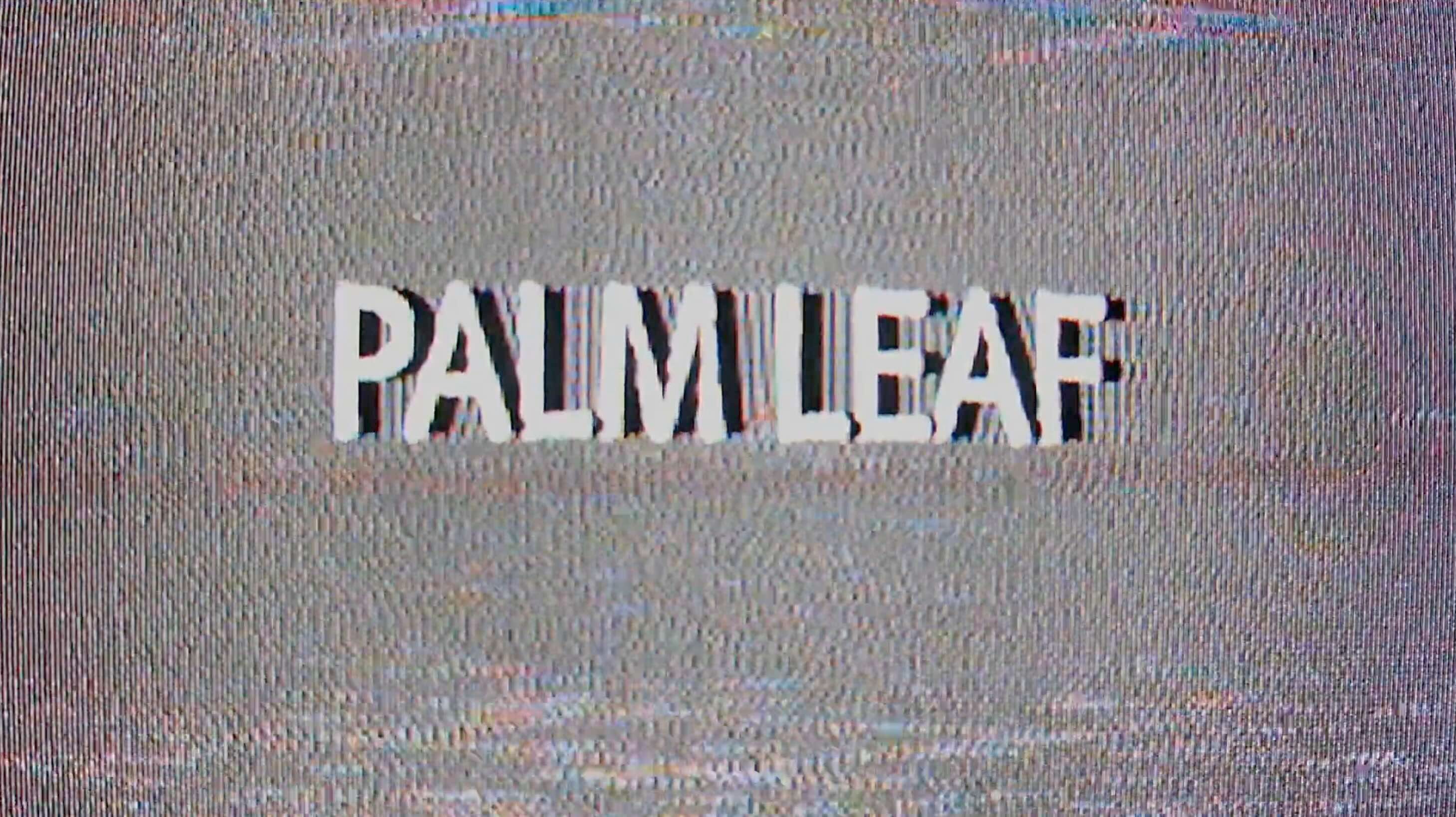
Visually the film is a feast of every low-resolution, low-tech method of making imagery ever devised. Primitive character generators glitch out on a broadcast TV set with a faulty antenna. We see close up shots of color CRT monitors, with pixels glowing in masses of pink and purple, generating Moiré patterns. Pixelated imagery underlines the film’s point about our misconceptions of technology. Pixelated images are images that are very low-information, filled with errors and getting a lot of the picture wrong, much like our own mental images of future technology.
Becker has spent years refining and perfecting a unique style and format for his work, basically a thematic song cycle of catchy pop tunes with evocative, poetic lyrics, exploring philosophical, cultural and political questions, and using a sophisticated blend of performance, animation, found footage and assemblage to amplify and extend his musical language. In The Shape of Things to Come, many of the songs are fully integrated with the found footage sequences, cutting voiceover comments from educational films about the wonders of evolution and technology directly into the song lyrics, assembling a fantastically condensed survey of the evolution of life on earth, from primordial microbes to humans drilling for oil, and onward into the overloaded anxiety which is currently being unleashed by Web 2.0. All of this is condensed, with remarkable concision, into a 3 minute pop song.
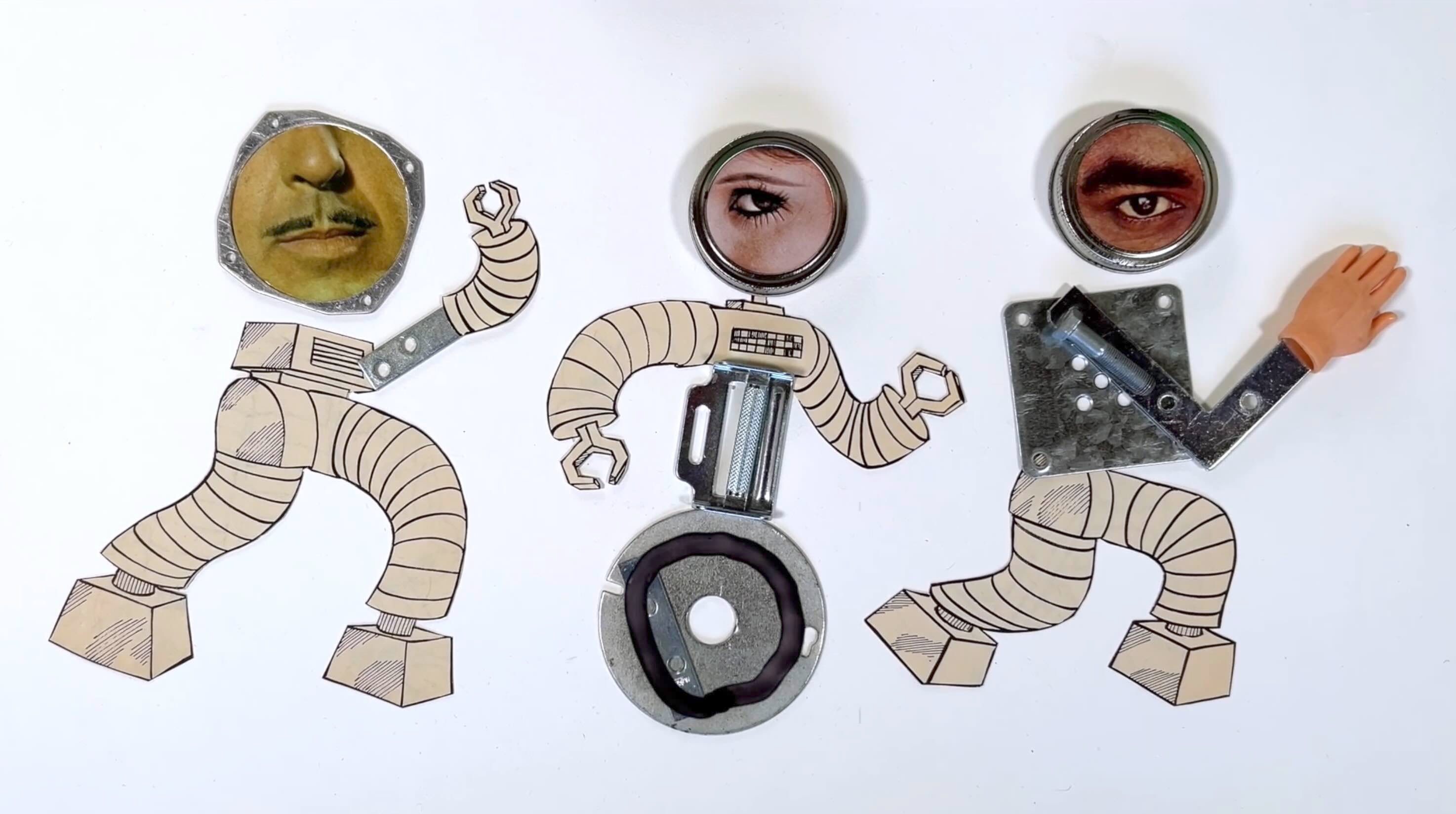
The Kids Paint a Pretty Picture is a cheerful song. Kids gush about how cool it will be to have robots do our household chores for us, like taking out the trash. The song is illustrated by assemblages of household hardware such as hinges and bolts, fitted with drawings of robot legs out of Lost in Space and with footage of human eyes blinking incongruously from their mechanical heads. These naive fantasy images are intercut with almost subliminally short snippets of warfare drones destroying cities and robots clearing homeless encampments. It turns out that the “trash” being taken out by the machines is us.
Timeline Into the Unknown is an infectious, latin-tinged rock song, like a forgotten Santana hit, a poetic narrative that contrasts the awe-inspiring feeling of watching a hawk circle above with a world of people with their attention locked to their phones. The visual collage ends with vintage scenes of scientists tending to giant mainframe computers, as they write code “to keep the robot sane.” The closing chorus repeats the phrase “all the feeling we see” as we watch cliché scenes of natural beauty alternating with shots of people staring at their phones. This is one way of looking at the problem of modern technology: if nature, emotions, relationships, values, politics, are all being transformed into shorthand memes and instagram snapshots, we’re left with only looking at representations of feelings, rather than actually feeling anything. Mesmerized by the spectacle, we pay no attention to the man behind the curtain.
Throughout the film we hear the technological musings of Terence McKenna, the psychedelic sage. McKenna’s notion of AI as an “alien being” we have “summoned” is a rather extreme overvaluation of a technology that, to date, hasn’t proved to be either useful or threatening. He turns out to be the perfect narrator of a film which is, after all, not about the reality of technology but about our fears and hopes for the machines of the future. McKenna, after all, is an expert in hallucinations, so he can at least be relied upon to tell us about things which aren’t actually there, even more so than Chat GPT.
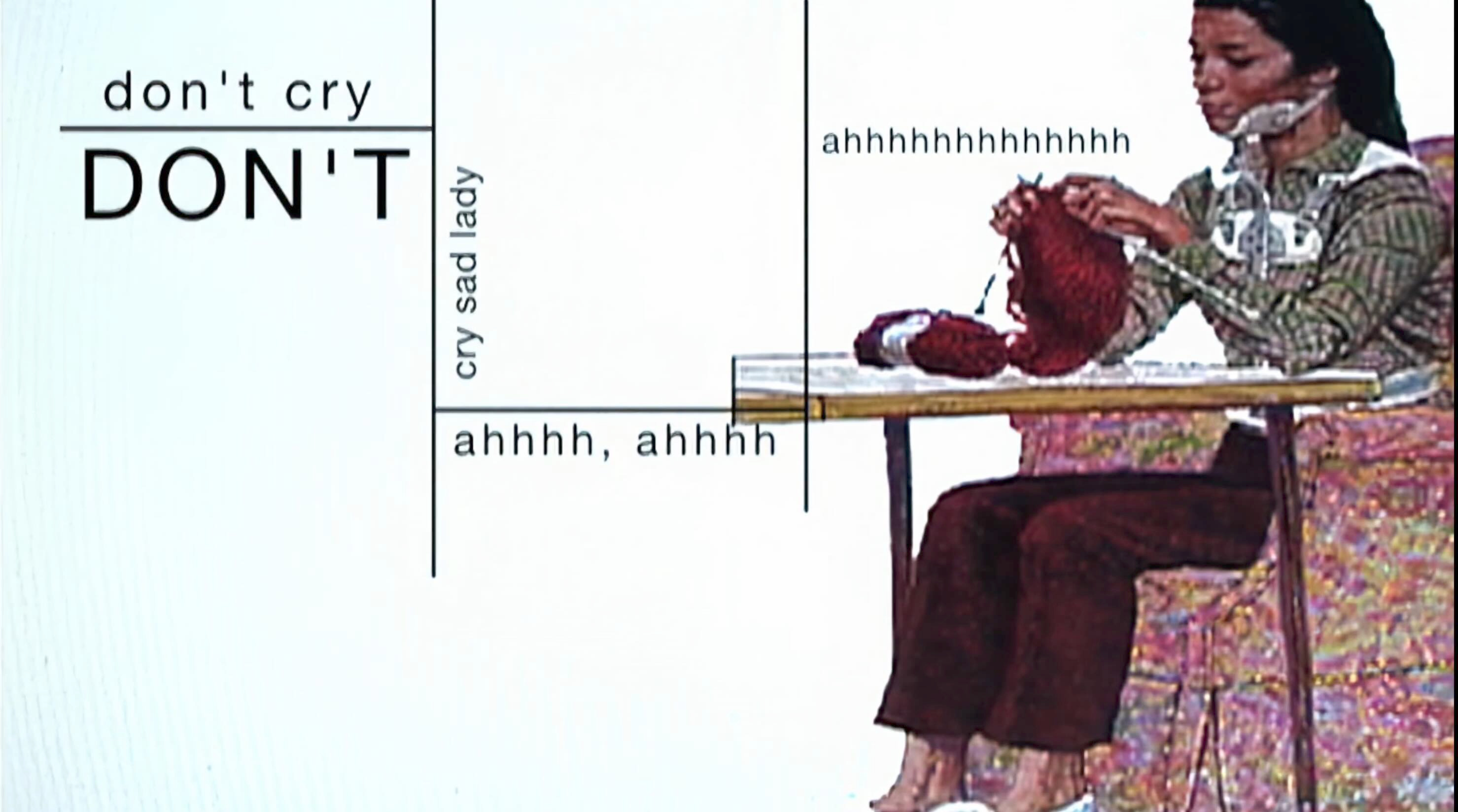
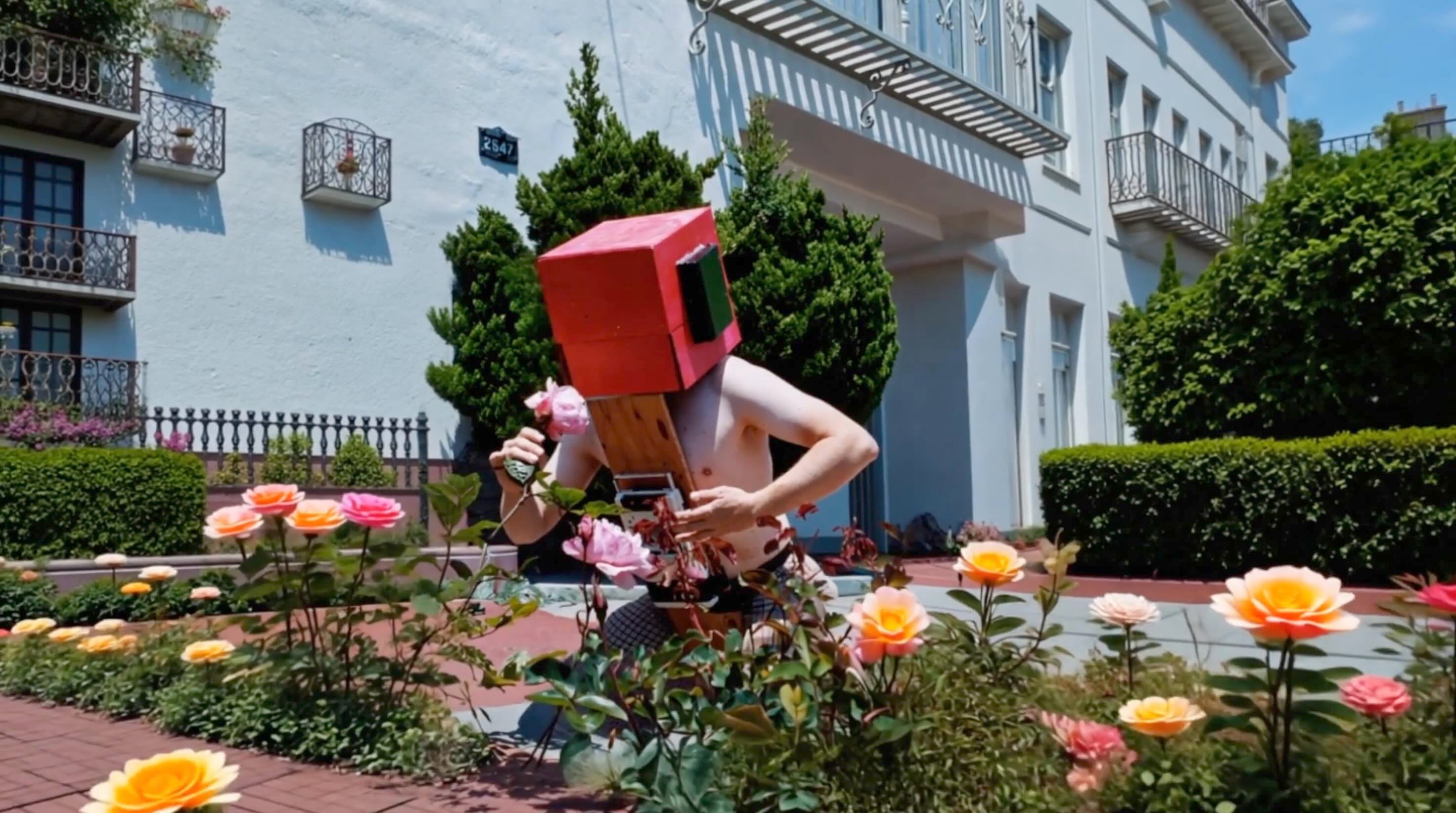
The film closes with an epic mini-opera, the story of Bobby XP1, a childlike robot that escapes from his home, bewildered by the people he meets on the street with their unpredictable human emotions, equally unable to process either their sadness or their happiness. The song is illustrated with very simple images of the people he meets, made to look something like illustrations from a child’s picture book. Bobby’s entreaties to them, begging them to stop crying or laughing, are depicted as graphic text displays over the footage. Frustrated with the encounters, Bobby covers over their features with a scrawl of black marker. His toneless, robotic voice sings his story to the tune of a plaintive pop ballad. The song ends with a poignant love song in the voice of Ralph, Bobby’s creator, a lonely programmer who’s wife left him, driving him to create a mechanical companion. He sings in the lovesick falsetto of the B-side of a lost Motown hit. A performer dressed as the robot is seen, dancing down the street and smelling the flowers in people’s front yards. His costume is made from cardboard, wood and an old cassette player, the actor wearing checkered pants and no shirt: typical of Becker’s homemade, DIY aesthetic, but also emphasizing his focus on our robot dreams and fantasies, rather than on real technology. Behind the mask, the robot is us.
The film ends with a quote from McKenna, speaking with amazing prescience in 1998, to the effect that technology will provide us with the means to each create our own realities with a startling level of realistic detail, giving birth to the problem of widespread social fragmentation, individuals and pockets of people locked into their personal view of reality, and the breakdown of our ability to work together towards common goals. We’re obviously starting to live through a version of that now, if not in precisely the way he described it. It’s a long way away from cheerful visions of friendly robots doing your household chores for you.
The Shape of Things to Come, with its appealing pop score and precise visual montage, will provide easy access to many viewers, but its point of view is far from simplistic. We’re both right and wrong about technology and the future, the film seems to say, at different moments and in different ways, but mostly, it turns out we’re being sold a bill of goods. The shining future of wonders and leisure turns out to be a magic trick mainly concerned with making good paying jobs disappear, while getting us to accept a world in which everything is done badly, with push-button ease. Hey, we say, this picture of the future is looking awfully funny as it comes into focus! Fiddle with the dial! What’s wrong with this set?
My articles on experimental film are freely available to all, but are supported by monthly and annual donations from readers. Please consider becoming a paid subscriber to support my work. Thank you.