
Classroom Sorcery: Elective: ART
(2023)

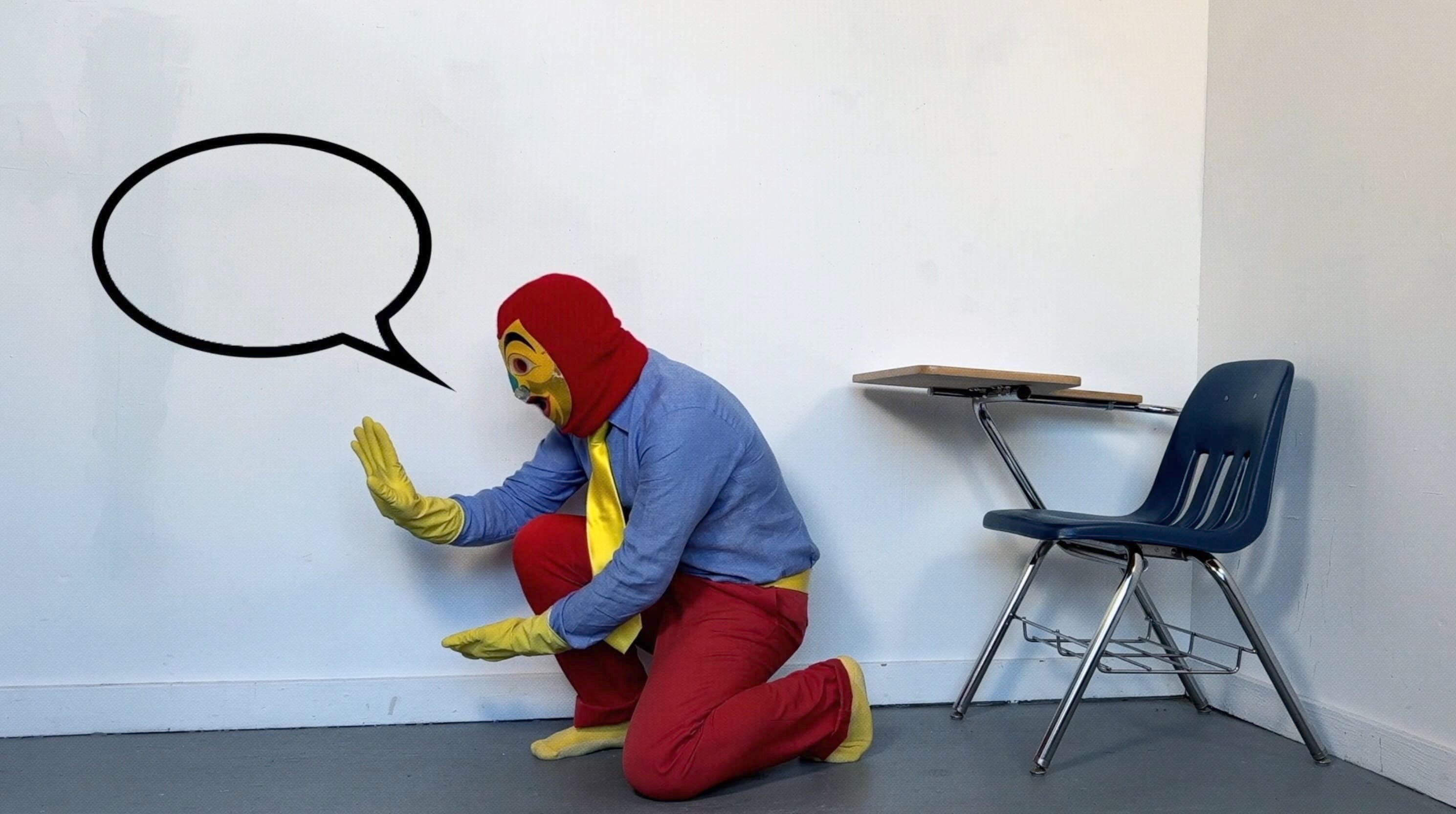
Elective: ART, a 30 minute short by Tommy Becker, is a recent installment in his ongoing series of rock opera poetic essay films, and it is inspired by his 20 years as a high school art teacher. Like many films in this series, Elective: ART blends found footage from old educational films, performance sequences, visual art, and a suite of original songs. Becker uses these elements to probe his topic in an indirect, metaphorical way.
The first thing we see is a model of a mountain with a tunnel built into it. The model is made of painted, carved styrofoam, and it might well be found in a school art project, but it also brings to mind the earliest known paintings, which are found in caves. The camera pans over a pile of rocks inside the tunnel, finally coming to rest on one with a red heart painted on it. These rocks seem to have many meanings throughout the film: as raw, elemental chunks, they can be seen as the raw ideas and emotions within kids, waiting for teachers to refine them into something more sophisticated. The heart can be seen as the love, the unique gifts to be found inside each child, waiting to be freed and cultivated with a teacher’s help.
Later, we see the figure of a hooded child at a desk, the outline of his body filled with seething black and white streaks and squiggles. The boy struggles to rearrange piles of the rocks on his desk, while bombarded with thoughts, seen in a cartoon thought balloon above his head, such as “good…bad…pass…fail.” Clearly this hooded child has had all the life, the curiosity, the spontaneity, and the creativity hounded out of him, shut into an endless round of adult demands to absorb and spit back random, meaningless bits of information. The art teacher finds himself in a unique position, inside the structure of a public school. The upside-down, dysfunctional nature of our contemporary public schools accomplishes the very opposite of education: instead of recognizing and encouraging the child’s natural curiosity and drive to explore, the child is beaten down into lifeless conformity and punished at every turn for simply having the natural qualities of a kid. But inside the art room, different rules apply. Here, it is still the teacher’s job to open up a space where a child’s imagination and passion are able to come out and explore materials creatively, where technical guidance leads to greater freedom, not to arbitrary rules. The art teacher’s role, within the school, is both subversive and exemplary.
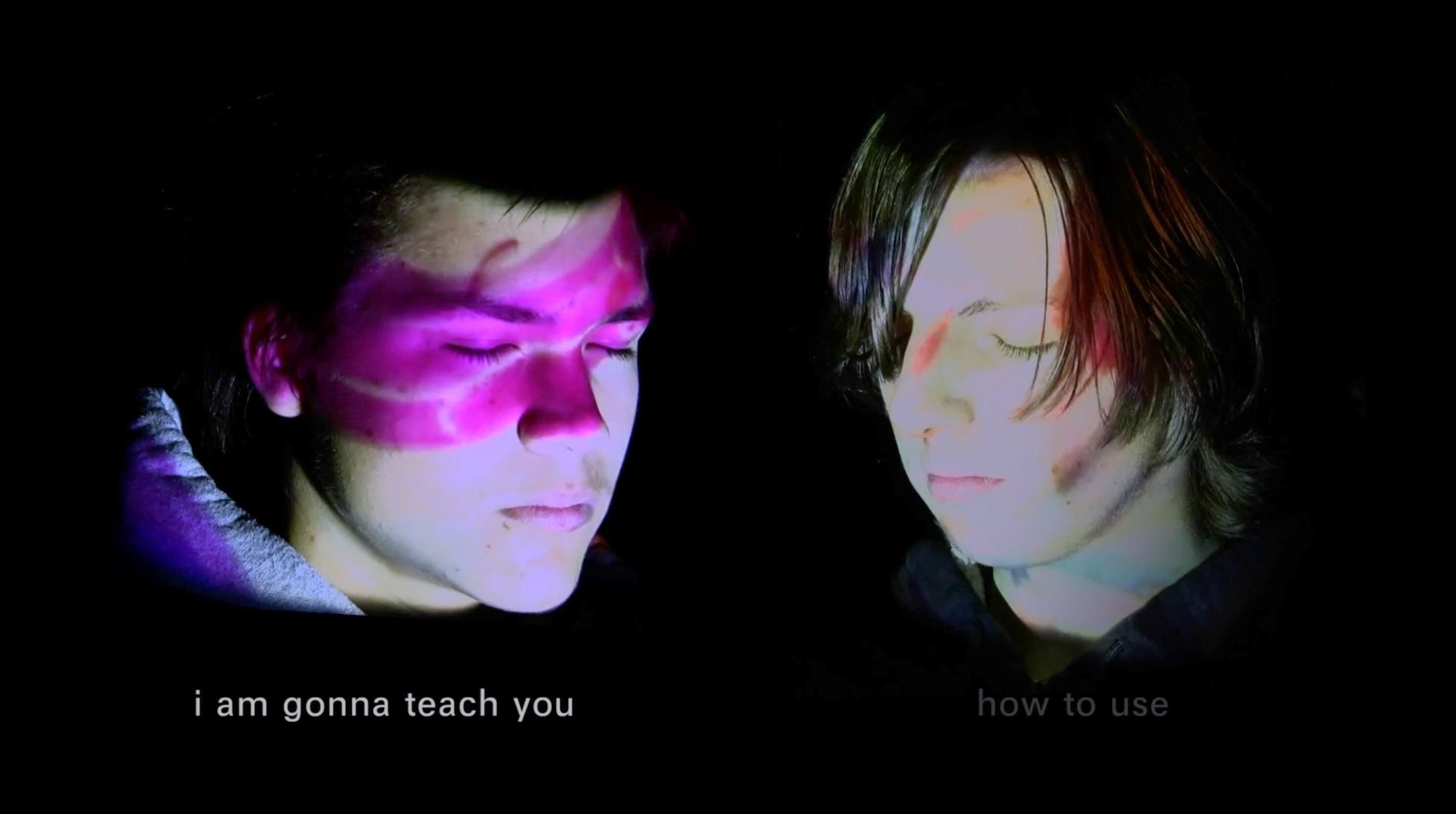
These themes are explored through many visual and musical metaphors throughout the film. The art teacher appears at times like a wizard, offering the kids a crystal globe filled with seething colors. The boy’s body magically switches from black and white to color, as he enters a classroom where his emotions and fantasies are actually desired and solicited. The boy, transformed by the magic colors of art, becomes a kind of clown/superhero figure, bestowing superpowers on the other kids in the form of a car wheel which is also a color wheel. In the background of many scenes, we see scantron cards, the kind you can use to answer a multiple choice test by marking them with a #2 pencil, but covered over with doodles and colorful designs. Art is the doorway out of the academic jailhouse, where free expression bursts out of the control grid.
Becker has a healthy respect for the way that the kids still manage to express their individuality and their passions, despite the repressive school environment: through jewelry, hair color, tattoos, and rebellious behavior. (The school is in San Francisco.) In one startling and exhilarating musical sequence, Becker invokes and inspires every kind of teen misbehavior imaginable, exhorting kids to “piss on the flowerbeds” and then act out in a variety of ways: sexual, musical, chemical. This “invocation of my demon brother” is elevated still further by the operatic soprano voice of Caroline Joy Clarke. The incantatory, subversive power of the song reminded me of the scene from Total Eclipse where Leonard DiCaprio, as the rebellious teenage genius poet Rimbaud, jumps up on the table where a group of older poets are drinking in a pub and pisses on everything and everyone. This is not to say that Becker literally wants kids to act like this in his classroom, or that, as a father, he wants his own kids to become juvenile delinquents, but he salutes and celebrates these signs that the school hasn’t in fact, succeeded in killing the spirits of these children: they’re ready, willing and able to fight back, in whatever ways they can invent. If an art teacher is really lucky, he may be able to use his classroom as a way of showing a few of these kids how they can channel some of this energy into skills which will actually help them survive and thrive as adults.
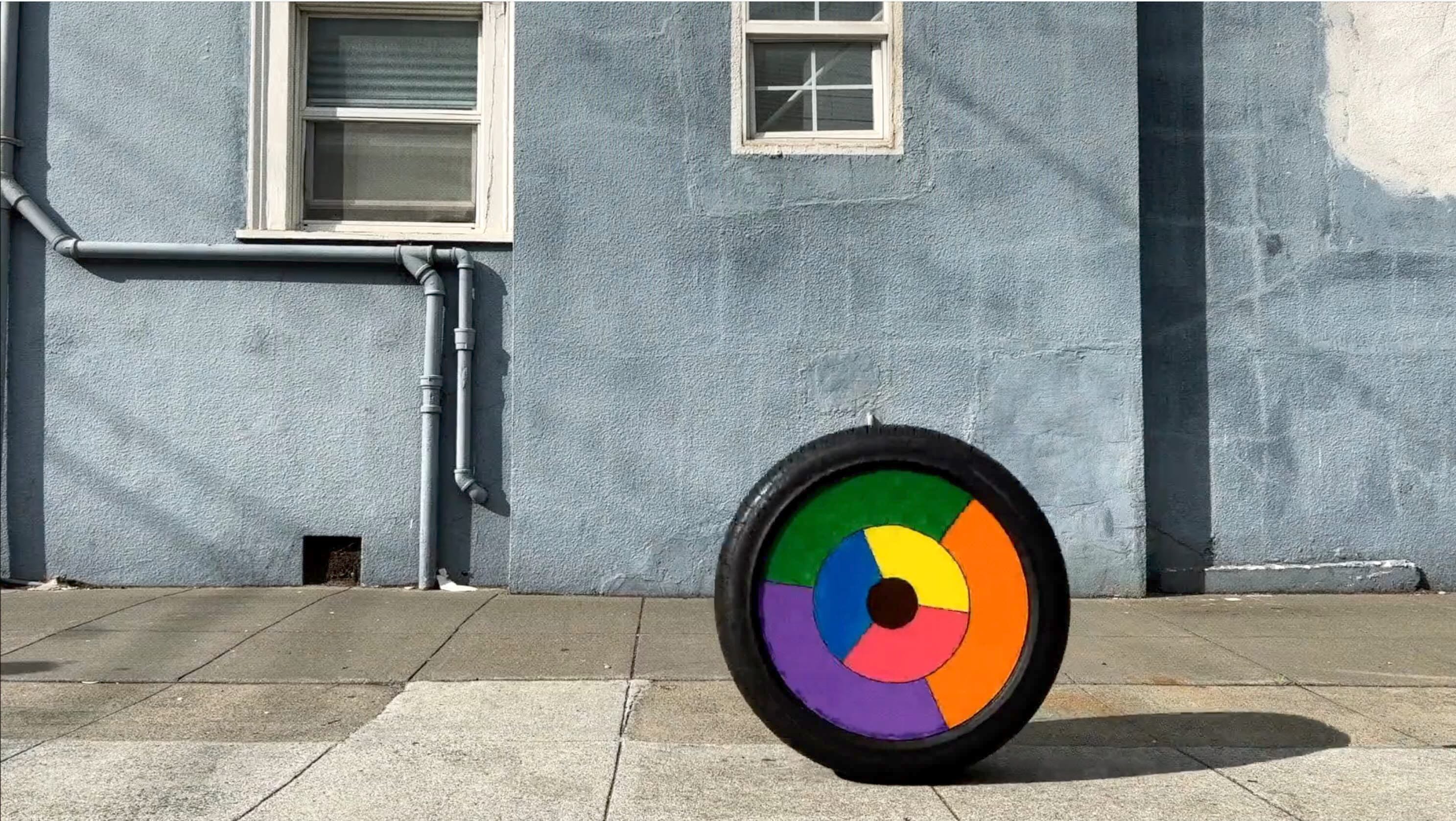
In one of the film’s poignant metaphors, the magic color wheel/car wheel takes off, and rolls by itself all over the city. Anyone who has ever tried to paint a picture or write a poem or create anything is familiar with this experience, that the work of art seems to have a life and will of its own, going where it wants, regardless of your original intent. However, after a while the wheel goes missing, evidently stuck somewhere, and the clown/boy is disconsolate, but the wizard/teacher offers another gift: a steering wheel. Unlike the steering wheel on a car, this one works remotely: the boy can stay in the classroom, and guide the rolling wheel to gradually return, where he triumphantly displays it, his new artwork, on a pedestal.
In this parable, the steering wheel can be seen as artistic technique, the understanding of the physical and optical properties of paint, and how to use them to produce the results you want. Slowly acquiring this mastery of technique, the student learns how to take the wild energy of his teenage imagination and passion and shape it into a form which pleases him (and others). This episode can be seen as an illustration of the artistic journey that David Cole referred to as “rounding” in The Theatrical Event: an artist takes a trip into the wild unknown of his imagination, but then uses technique and skill to capture the visions and knowledge he has acquired and bring them back in tangible form, to be appreciated by the public.
Elective: ART reminds us all of that terrifying powerful moment from childhood, when we dare to put paintbrush to the paper, seeing if we can make our private visions into visible marks, public declarations. In one of the film’s moving songs, a student wonders if his painting is clear enough to convey his dramatic conception of a heroic dog who saves a man’s life. Is it the right size? Are the dog’s teeth the right shape? Or does the easel collapse? Does he spill the paint? The risk and adventure of creation is by turns exhilarating and overwhelming, filled with promises and pitfalls. Becker has clearly spent his decades in the art classroom perhaps posing as a wizard, but acting like a thoughtful, watchful mentor and friend, daring these kids to look inside themselves and take a chance sharing their ideas with the world. And the poetic inspiration he brings to his own film, as well as the abundant musical, visual and editing skill on display here, are all testaments to why he was the right man for the job.
My articles on experimental film are freely available to all, but are supported by monthly and annual donations from readers. Please consider becoming a paid subscriber to support my work. Thank you.